How to Recreate a Fashion-Forward Product Ad Video Using PixPix
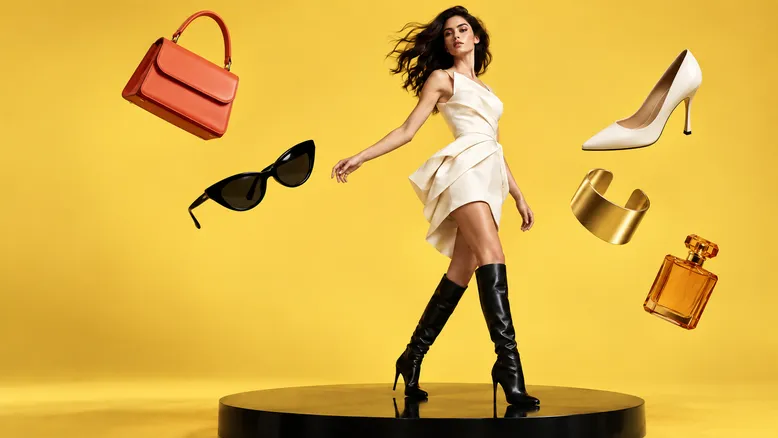
This is a vertical‑format fashion ad lasting approximately 10秒 . The video opens with an urban woman walking toward the camera, then uses time‑lapse close-ups of sunglasses, an iced drink, and a brown crossbody bag to transform ordinary street‑style shots into a rhythmically paced brand short.
At the end of the scene, the handbag, sunglasses, and drink all fall simultaneously and come to rest in front of the subject, creating a finale that combines a fashionable vibe with focused product presentation.
Analysis of the finished footage
The video’s visuals closely follow the 9:16 vertical aspect ratio, with an output size of 1080 × 1912 , a runtime of approximately 10秒 , and a frame rate of 30 fps .
The setting takes place on a sunlit outdoor corridor. The background features white buildings, palm trees, pedestrians, and pets, evoking a relaxed urban‑vacation atmosphere.
The subject wears a dark brown top, black shorts, and brown boots, carries a brown handbag over the shoulder, and holds a transparent cup filled with an iced beverage. The overall outfit maintains a unified brown color scheme that ties in with the products.
The main visual sequence includes:
A low camera angle follows the subject, starting from their legs.
The camera gradually pans upward, revealing the full outfit and handbag.
A woman wearing sunglasses and holding an iced drink walks toward the camera.
The sunglasses come into the foreground and hover in a time-lapse sequence.
The camera cuts to a close-up of the eyeglass temple and its metal frame.
The iced drink glass enters the center of the frame, with the glass body and ice cubes displayed in close-up.
A spherical element, tinged with the color of a beverage, spins in midair.
A product close-up showcasing spherical elements seamlessly integrated into a brown underarm bag.
The handbag hovers against a clean backdrop, fully showcasing its silhouette and material.
The figure loses their balance, and their handbag, sunglasses, and drink all fly out at once.
Multiple objects fall in slow motion and come to rest in front of the character.
The product falls to the ground, and the figure stands in the background, bringing the scene to a close.
Where does this video’s “time‑lapse feel” come from?
Since the original source file itself is 30 fps , we cannot confirm solely from the finished clip whether it was shot using genuine high‑frame‑rate footage. Here, the term “time‑lapse” primarily refers to the slow‑motion effect and the sense of temporal suspension conveyed by the visuals—specifically, the and aspects.
Movements are noticeably slowed down
When sunglasses, the iced drink, spherical droplets, and the handbag enter the frame, their motion appears significantly slower than normal. This allows viewers to clearly observe the products’ shapes, materials, and surface reflections.
Products briefly hover in midair
Rather than swiftly passing through the frame, the sunglasses and handbag pause briefly at the center of the scene. This suspended state minimizes background distractions and gives the products a still-life‑like presentation.
Extreme close‑up shots are employed
The camera progressively zooms in on the sunglasses’ lenses, temples, the drink’s cup, and the handbag’s surface. Each close‑up highlights a single visual focal point, lending the short film a clear rhythm of product showcase.
Transitions are achieved using moving objects
Rather than relying on ordinary fades, the video uses sunglasses, a cup, and spherical elements to obscure the frame or occupy the foreground, seamlessly transitioning to the next product.
Shot Rhythm Breakdown
Time | Visual Content | Main Function |
|---|---|---|
| Low-angle tracking shot of a person walking forward | Establishing a fashion-forward persona within an urban street‑style setting |
| Sunglasses fly into the foreground and transition into a detailed close-up | Introducing the first accessory |
| An iced beverage cup hovers as the camera moves close to its surface | Linking to lifestyle scenes |
| A spherical element rotates, transitioning smoothly into a brown handbag | Completing the visual transformation and unveiling the product |
| Close-up of the handbag suspended in mid-air | Showcasing the main product’s silhouette and material |
| The character becomes unbalanced, with multiple items ascending and then falling | Building toward a climactic moment and concluding the sequence |
Why is this structure well-suited for fashion products?
Instead of isolating the product against a solid-color background, the video first features characters wearing and using the item before moving into detailed product close-ups. This approach allows viewers to appreciate both the styling effect and the product itself.
Sunglasses, beverages, and handbags together form a cohesive lifestyle:
Sunglasses: Reinforce the character’s fashionable attitude.
Iced beverage: Adds a relaxed, youthful vibe to the scene.
Handbag: Serves as the focal point, providing the final visual anchor for the entire composition.
Brown-toned outfit: Harmonizes the character’s attire with the product’s color palette.
Outdoor corridor: Offers a bright, modern urban backdrop.
How can you recreate this type of elevated ad using PixPix?
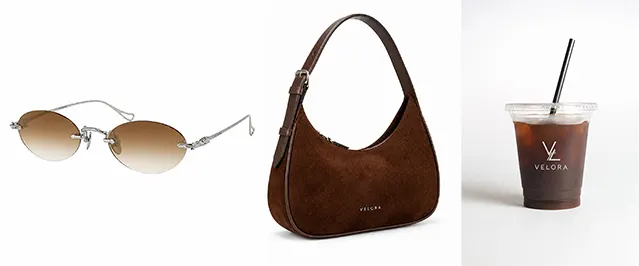
Prepare character reference images, locking in the character’s appearance, hairstyle, and clothing.
Upload product reference images of a brown handbag, sunglasses, and a clear iced beverage.
Have the Agent analyze the shot sequence, slow-motion highlights, and product transitions from the reference video.
Break the video down into four stages: “character approaching—accessory close-up—handbag revealed—object falling.”
Create a video generation node and add the character and product reference images.
Set the aspect ratio to
9:16and the duration to approximately10秒.Paste the video prompt and generate the video.
Check that the movements of the character, products, and objects remain consistent.
Apply post-production overlays with accurate text on the sunglasses, cup body, or handbag.
Video Generation Prompt
The following prompts are reworked versions compiled based on the final footage, not the original prompts shown in the video.
A roughly 10-second, 9:16 vertical-format fashion commercial short film, featuring high-frame-rate, slow-motion-like visuals. Set against a modern outdoor corridor on a bright afternoon, with white architectural columns, palm trees, and bright natural light as the backdrop, occasional pedestrians and pets pass by in the distance, while the background remains softly blurred.
An adult urban woman walks confidently toward the camera. She has long dark hair, wears narrow brown-framed sunglasses, and is dressed in a deep brown sheer‑patchwork top, black shorts, and brown boots, carrying the brown underarm bag from the reference image on her shoulder, while holding a clear iced beverage in her other hand. The character’s identity, outfit, hairstyle, and accessories remain consistent throughout the entire clip.
The opening uses a low camera angle close to the ground, first capturing the character’s boots and steps, then smoothly rising to a half‑body shot. As she continues walking toward the camera, her hair, sleeves, and bag strap sway slightly with each step, moving naturally and confidently, while sunlight creates realistic highlights on her clothing and the products.
The sunglasses enter the frame from the character’s face, creating an almost slowed‑down effect. The lenses, metal frame, and temple arms rotate smoothly in midair, and the shot transitions to an extreme close‑up, clearly showing the sunglasses’ structure, materials, and brand logo. The product maintains its shape, with both lenses and temples remaining symmetrical.
Using the sunglasses as a visual barrier, the scene shifts seamlessly to a close‑up of the clear iced beverage. The deep amber liquid, ice cubes, and straw are all clearly visible, with the ice slowly drifting and condensation droplets forming on the cup’s surface. The cup briefly hovers in the center of the frame, with the liquid staying securely inside without spilling.
A spherical droplet with an amber sheen slowly floats out from near the cup, spinning gracefully in the air. The camera follows this spherical element, and through a matching shape transition, it moves naturally to the brown underarm bag from the reference image. The handbag hovers against a clean, bright background, rotating slowly and fully showcasing its silhouette, shoulder strap, metal fasteners, and suede or leather texture.
The camera returns to the full figure of the character. While walking forward, she suddenly loses balance slightly, her hands naturally spreading apart. The brown handbag, sunglasses, and iced beverage fly out from beside her in high‑frame‑rate slow motion, maintaining distinct, independent trajectories in the air. Ice cubes, water droplets, and small liquid particles float in the side lighting, exhibiting realistic gravity and inertia.
Finally, the handbag, sunglasses, and beverage land on the ground in front of the character. The handbag rests centrally, facing forward intact, while the sunglasses and beverage are distributed on either side, with the character standing behind, gazing at the products. The camera stabilizes and freezes, creating a commercial ad ending with a chic magazine‑like feel.
Throughout the clip, shallow depth of field, natural motion blur, realistic physical movement, and high‑quality commercial lighting are employed. All products strictly adhere to their corresponding reference images, with no changes to color, structure, material, logo placement, or size proportions.
Negative Prompts
Changes in character identity, flickering faces, alterations in clothing, hairstyles, abnormal body proportions, extra figures, superfluous arms, extra fingers, fused fingers, characters passing through objects, sudden jerky movements; deformed handbags, broken shoulder straps, melting bags, material changes, shifting product colors, garbled brand lettering; incorrect numbers of sunglass lenses, asymmetrical frames, missing temple arms; deformed cups, abnormally bent straws, liquids seeping through cup walls, sudden changes in the number of ice cubes, large splashes of liquid; chaotic object trajectories, weightless floating, products interpenetrating, severe camera shake, distorted backgrounds, abrupt lighting changes, out-of-focus subjects, excessive motion blur, low clarity.
Key considerations during replication
Clearly define the main product
In the original video, people, sunglasses, drinks, and handbags all appear simultaneously, but the visual focal point is ultimately the brown handbag. When replicating, you should identify the main product in advance; other items should only serve to create transitions and a lifestyle‑oriented atmosphere.
Control the pacing of slow motion
Not every shot needs to be equally slow. The character’s entrance can remain at normal speed, while the enhanced time‑lapse effect should be applied when products enter the foreground, objects hover, or finally fall—this will add greater rhythmic variation.
Maintain the product’s form
Sunglasses, cups, and handbags appear one after another, which can easily confuse viewers about the different objects. In your prompts, describe each item separately and provide an independent reference image for each object.
Ensure clear transition relationships
It’s recommended to use distinct visual connections:
After the sunglasses block the frame, switch to the drink.
A spherical element from the drink flies out and connects to the handbag.
After the close‑up of the handbag, return to a full‑body shot of the person.
Finally, have all objects enter a slow‑motion descent simultaneously.
The essence of this type of video isn’t simply slowing down the characters’ movements; rather, it uses time‑lapse effects to highlight key moments such as products entering the scene, material textures being showcased, and objects falling. By alternating between normal speed and slow motion, even ordinary street‑style footage can transform into a product ad with the polished look of a high‑end fashion shoot.

AI Image Tool Built for E-commerce Teams
For new product launches, advertising, and promotional campaigns, use AI to generate product images, scene visuals, ad creatives, and short video assets — making content production faster.